A Guide for Clinicians and Dental Distributors
Choosing a dental implant system is not just a clinical decision. It’s a commitment.
For clinicians, it means placing a system that they’ll be accountable for years down the line.
For distributors, the stakes are even higher. Partnering with a dental implant manufacturer is often described as a “marriage”. Registration processes are long and market-specific, and once a distributor commits, their entire business model is built around that brand. Switching is costly, disruptive, and sometimes not possible at all.
With hundreds of dental implant manufacturing companies operating across every continent, the challenge is no longer finding options. It’s knowing which criteria actually matter.
This article breaks down the global landscape of implant manufacturers, what regulatory certifications protect you and your patients, the science behind implant surface technology, and how to evaluate a manufacturer beyond the marketing.
A Growing and Crowded Market
The global dental implant market is estimated at approximately $5.75 billion in 2026, projected to reach $11 billion by 2033 (Mordor Intelligence, 2026).
The growth is driven by aging populations, rising demand for aesthetic dentistry, and expanding access to implant treatment across emerging markets.
Geographically, North America leads with roughly 37% of global market share, followed by Europe at approximately 35%. But the fastest growth is happening in Asia-Pacific, projected to expand at a rate of 10% annually through 2031.
The market is not evenly split. A small group of multinationals dominates by revenue. But market share reflects sales infrastructure and brand history, not necessarily clinical superiority. Multiple systematic reviews published in peer-reviewed journals have found that many implant systems perform comparably in 5-year survival rates (Esposito et al., 2005; Faggion et al., 2011) – though this should not be interpreted as clinical equivalence across all indications and bone quality scenarios.
This creates a genuine opening for well-engineered, properly certified manufacturers to compete on merit.
The Regulatory Framework: Why Certification Is the Starting Point, Not the Finish Line
CE MDR – The New European (and Global) Benchmark
The most significant regulatory shift in recent years has been the European Union’s transition from the legacy Medical Device Directive (MDD) to the EU Medical Device Regulation (EU MDR 2017/745). For dental implants, this is not a paperwork update. It represents a fundamentally stricter framework.
Under EU MDR, implant manufacturers must now:
- Submit a Summary of Safety and Clinical Performance (SSCP) for public access
- Issue an Implant Card for every patient
- Maintain ongoing Post-Market Clinical Follow-up (PMCF)
- Submit Periodic Safety Update Reports (PSURs)
- Pass conformity assessment by an EU-accredited Notified Body
The MDR deadline for Class III implantable legacy devices is December 31, 2027. Manufacturers that did not have an MDR-compliant QMS and a Notified Body application in place by May 2024, and a written agreement with their Notified Body by September 2024, may no longer be eligible for the extended transition period that allows Class III and Class IIb implantable devices to remain on the market until December 31, 2027.
In other words, many small manufacturers will leave the market soon, opening space for others.
This matters for distributors and clinicians: a CE MDR-certified implant comes with enforceable traceability, publicly accessible clinical data, and a structured post-market surveillance obligation. It is not simply a stamp, it’s a system of ongoing accountability.
We recommend verifying certification status directly with the manufacturer’s Notified Body and reviewing supporting documentation independently. When in doubt, do not rely solely on materials provided by the manufacturer.
Other Key Regional Certifications
FDA 510(k) clearance is required for the US market and involves demonstrated substantial equivalence to a legally marketed predicate device, plus biocompatibility and mechanical performance data.
ISO 13485 is the international quality management standard for medical device manufacturers. It covers design, production, installation, and post-market service. It is required as a foundation for most major regulatory submissions globally and is a non-negotiable baseline for any serious manufacturer.
COFEPRIS (Mexico), TGA (Australia), PMDA (Japan), and equivalent national bodies serve regional markets with their own documentation and testing requirements. A manufacturer with multiple regional certifications is not just more compliant, they are operationally more sophisticated, and less likely to create problems downstream for the distributor or clinic.
When evaluating dental implant manufacturing companies, ask specifically which certifications they hold, how recently they were renewed, and whether documentation is available on request. Any manufacturer unwilling to provide this is a red flag.
The Science Behind the Implant: What Manufacturing Decisions Actually Affect
Material Grade and Purity
Virtually all quality dental implants are made from commercially pure titanium (cp-Ti, Grade 4) or titanium alloy Grade 5 / 23 (Ti-6Al-4V ELI). When exposed to oxygen, titanium rapidly forms a stable titanium dioxide layer on its surface – a passive film central to its corrosion resistance and long-term biocompatibility. The grade, purity, and processing conditions of the raw material all affect the quality of this oxide layer, and therefore the biological behavior of the implant at the tissue interface.
Read more about the differences between titanium grades in dental implants: Titanium Grades in Dental Implants
Surface Treatment
Of all manufacturing variables, surface treatment has the most documented impact on osseointegration – the biological process by which bone cells grow onto and integrate with the implant surface.
Sandblasting and acid etching (SLA) is the most researched and most widely used surface treatment in implant dentistry. The process creates a controlled micro-rough topography that significantly increases the surface area available for bone contact and promotes osteoblast adhesion. Decades of clinical and histological research support SLA as a reliable, reproducible surface treatment with consistently high osseointegration rates across bone quality types.
A 2025 systematic review in the British Dental Journal confirmed that surface treatment quality is a key determinant of long-term implant survival – and that the evidence base for established surface protocols like SLA is substantially stronger than for many newer surface claims.
On that point: some manufacturers market proprietary surface modifications with claims that go beyond what the published evidence supports. A 2009 systematic review (Journal of Evidence-Based Dental Practice) found that several surface technology claims could not be fully supported by available literature, even among RCTs. Surface treatment matters – but the claim needs to be verified against peer-reviewed data, not taken at face value from a product brochure.
Implant Geometry and Thread Design
Thread pitch, depth, and implant taper determine primary stability at placement. This has direct consequences for whether immediate or early loading protocols are feasible. Manufacturers who invest in biomechanical engineering and iterative design testing produce implants that perform more consistently across variable bone densities – which is particularly relevant for clinicians working in markets where bone augmentation is less routinely performed.
Precision Tolerances at the Implant-Abutment Connection
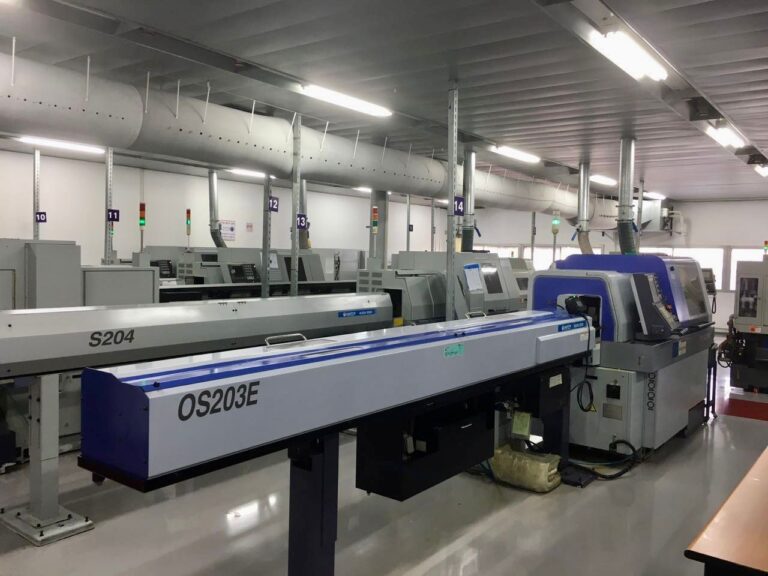
The implant-abutment junction is one of the most mechanically loaded interfaces in the entire restoration. Microgaps at this connection can harbor bacteria and contribute to crestal bone loss over time. The tighter the machining tolerances, the more predictable the long-term biological and mechanical outcomes. This is a manufacturing detail that is difficult to assess from a catalog – but one that experienced clinicians notice immediately on first placement.
What Peer-Reviewed Research Says About Choosing Between Systems
Multiple systematic reviews published in indexed clinical journals have reached a consistent conclusion: many dental implant systems achieve similar 5-year survival rates, with the pooled rate across systems hovering around 96%. What differs significantly is the quality and independence of the evidence behind each system.
Research published in the International Journal of Oral & Maxillofacial Implants found that most manufacturer-supplied evidence consisted of low-level case series or expert opinion rather than robust clinical trials. A subsequent systematic review in the International Journal of Prosthodontics recommended that clinicians judge implant systems by the strength of published evidence – and noted that the amount and quality of evidence differed substantially across companies.
The practical implication: a clinician or distributor evaluating dental implant manufacturers should look for independent peer-reviewed publications, not just company-provided references or in-house white papers. Evidence-based selection starts with understanding what kind of evidence is actually on the table.
MSDI: A Manufacturer Built on Confidence
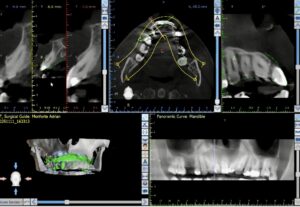
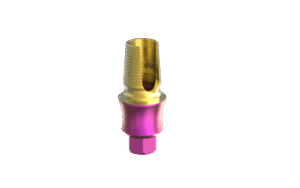
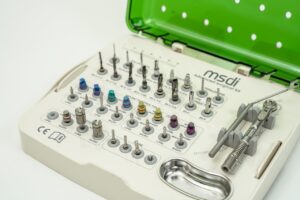
MSDI is a dental implant manufacturer with 27+ distributors worldwide. Backed by vast manufacturing experience, it offers a wide range of implant systems, digital & guided solutions – and most importantly, global certificates including CE MDR, FDA, ISO, COFEPRIS and TGA.
Whether you are a clinician or a distributor, contact us to learn what we can do for you.
The Bottom Line
A dental implant is only as reliable as the company that made it and the regulatory framework that holds them accountable. In a market this large and this varied, the brands with the biggest marketing budgets are not automatically the safest choice. The manufacturers with full regulatory compliance, transparent clinical data, and a serious approach to post-market surveillance are.
Ask the right questions. Check the certifications. And look beyond the catalog.
References
- Grand View Research (2026). Dental Implants Market Size & Share, Growth Analysis 2026–2033. grandviewresearch.com
- Mordor Intelligence (2026). Dental Implants Market Size, Trends & Forecast 2026–2031. mordorintelligence.com
- Saba T et al. (2025). Success and survival of titanium surface modification on dental implant osseointegration: a systematic review. British Dental Journal. Nature Publishing Group.
- European Commission (2017). Regulation (EU) 2017/745 on medical devices (EU MDR). EUR-Lex. eur-lex.europa.eu
- European Commission (2023). Regulation (EU) 2023/607 — MDR transition period extension. EUR-Lex. eur-lex.europa.eu
- Eckert SE, Choi YG, Sánchez AR, Koka S. (2005). Comparison of dental implant systems: quality of clinical evidence and prediction of 5-year survival.Int J Oral Maxillofac Implants. 20(3):406–15. PMID: 15973952
- Bhatavadekar N. (2011). Helping the clinician make evidence-based implant selections. A systematic review and qualitative analysis of dental implant studies over a 20-year period. Int J Oral Maxillofac Implants. PMID: 21141209
- Eckert SE, Parein A, Myshin HL et al. (1997). Validation of dental implant systems through a review of the literature supplied by system manufacturers.J Prosthet Dent. 77:271–279.
- Bhatavadekar N. (2009). Clinical decisions and the quality of evidence available for dental implants. J Periodontol. 80(10):1559–61. PMID: 19792840
- Bhatavadekar N. (2008). Assessing the evidence supporting the claims of select dental implant surfaces. Int Dent J. 58(6):363–70. PMID: 19145798